Automation is one of those words that
can make a simple conversation sound complicated.
Sometimes the best automation project
starts with something very ordinary: “Why are we still doing this manually?”
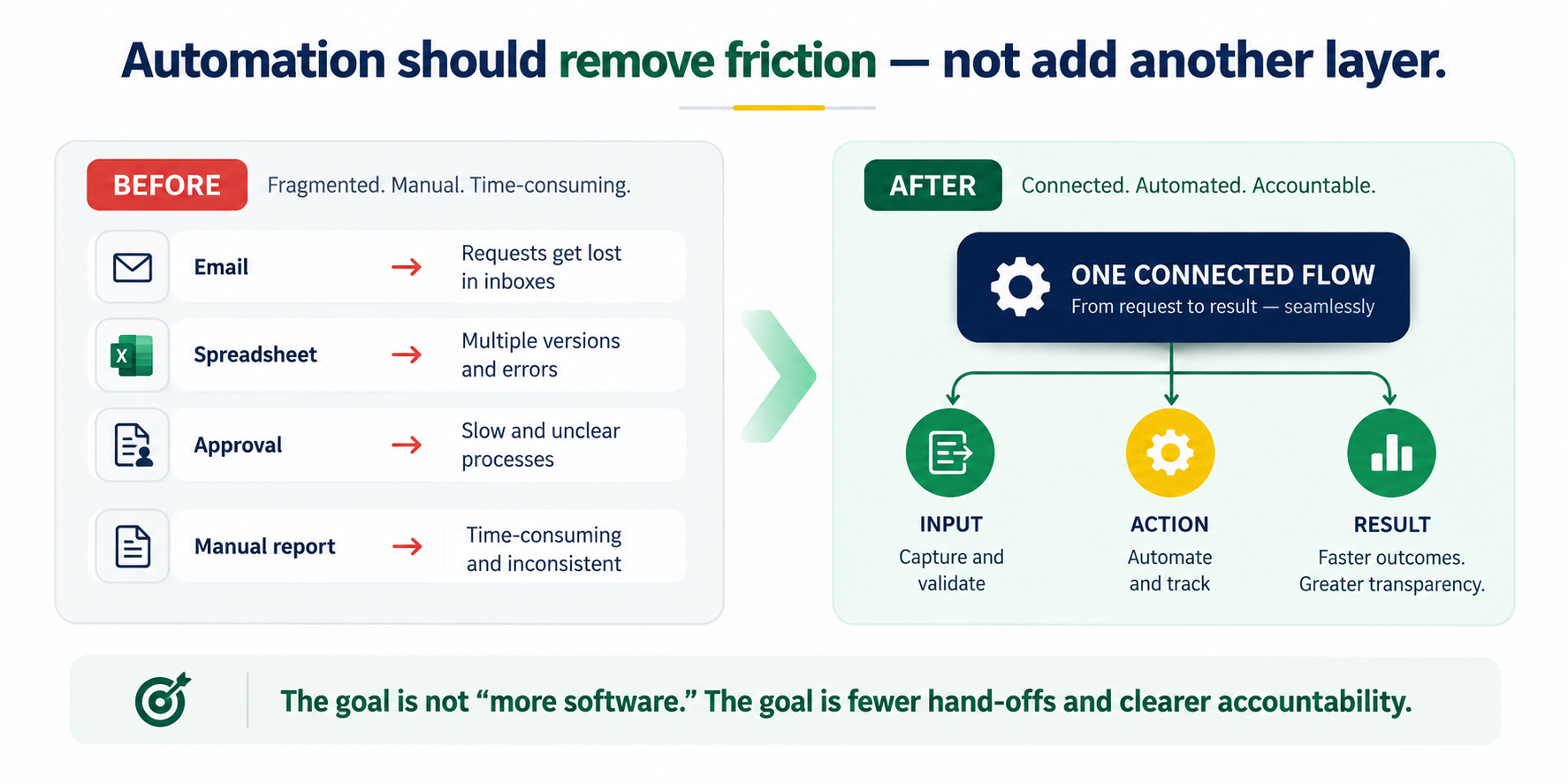
Maybe someone downloads a spreadsheet
every morning, cleans it up, sends it by email, waits for approval, updates
another file and then prepares a report from the same information. Nobody chose
this process deliberately. It simply grew over time.
That is where good automation can make
a real difference.
The goal is not to introduce another
application because it is fashionable. The goal is to remove unnecessary
repetition, reduce avoidable errors and give people time to focus on work that
actually requires judgement.
But there is an important step before automation:
understanding the process.
Automating a bad process does not make
it a good process. It simply allows the bad process to happen faster.
Before building a workflow, teams
should ask simple questions. What is the purpose of this process? Where does
information enter? Who actually needs to approve it? Where do delays happen?
Which steps add value and which ones exist only because “that is how we have
always done it”?
Once those questions are answered,
technology becomes much more useful.
For businesses, this can mean faster
approvals, better reporting, cleaner data and fewer hand-offs. For employees,
it can mean spending less time chasing emails and more time solving problems.
This is the practical side of digital
transformation. It is not always about launching something spectacular.
Sometimes it is about removing five small frustrations that people deal with
every day.
At Caesarvisions, our workflow and
business process automation work is focused on connecting processes, reducing
bottlenecks and helping organizations gain better visibility into their
operations.
The practical takeaway:
|
“Don't automate because
you can. Automate because there is a problem worth solving.” |